Welcome to my personal website
⚠ This site is still under development and is updated continuously as work progresses. What you see here is the preliminary version. If you want to follow what has changed and when, see the version log.
Short about me and this site:
On this site you can read more about me: who I am, what I have done and experienced through the years, which
interests I have had and still have today, and which skills I have built up. You can also visit
About the Site, where I explain the background of the site and where
you will also find a version log. The idea is that new content will be added continuously. This is my personal site,
so the content reflects whatever I feel like writing about on the day I continue working on it.
Who am I?
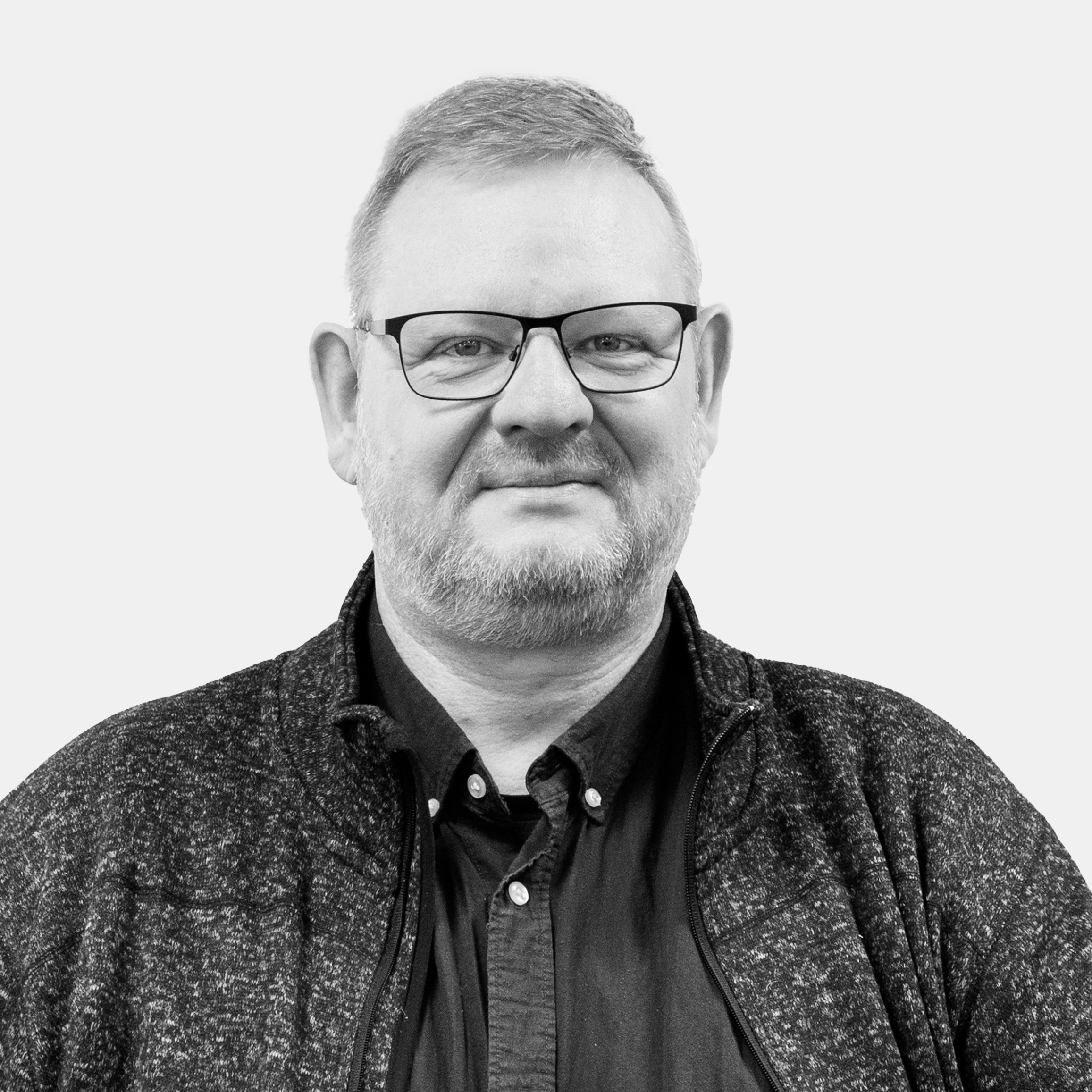
My name is Jens Ole Mortensen and I work as an IT specialist and software developer with solid hands-on experience
in software development, IT integration, and system development. I have great respect for practical solutions,
sound engineering principles, and a clear focus on stability, security, and generic solutions where possible.
In my day-to-day work, I am employed at a larger Danish company, where I work as an IT specialist and software
developer – and have previously held the role of IT support specialist. Today, however, I work mostly with
software development, SQL databases, Microsoft Azure services, and more demanding IT tasks. I make extensive use
of AI tools in the development of complex automated systems, including handling emails related to material
deliveries, extracting data from material certificates, validating them against ERP data, and storing data in
SQL databases and other systems for production and process data, which is then packaged into project-specific
documentation bundles of various kinds.
Is this site only about IT?
No, it is much more than IT and programming. I am trained as a toolmaker and have, among other things, worked in
metal fabrication and as a certified welder. For a period I operated both mobile cranes and truck-mounted cranes,
and I have run my own small metal fabrication and machine-building business with an attached plumbing division,
where I employed both skilled workers and apprentices. Today I also run a small IT company alongside my primary job,
working with IT sales and support, technical IT solutions, as well as software, web, and database development. You
can read about all of this, and much more, on this website, and there are also many pictures in the gallery and in
my scrapbook.
Why create a personal website?
The idea for this website came from curiosity and a desire to test new possibilities in practice with AI. The
underlying code for the site has, for the most part, been developed with AI alone. The site functions both as a
personal experimental project and as a presentation of me, my background, my interests, and my experience. Perhaps
you, or someone you know, may need some of the things I can do or some of the skills I have. If so, I am available
for consulting or freelance work through my company JOM-IT. Or perhaps we have some kind of connection and you are
simply curious about who I am and what my background is. In any case, you are welcome on the site.
What do I do in my free time?
In my free time I have, for many years, ridden motorcycles. Today I volunteer as a board member at HSJ
Skydesport, where I also handle IT tasks. I primarily shoot clay targets, I am a clay-shooting instructor, I also
shoot rifle, and I reload my own rifle ammunition.
My story - the long version
My name is Jens Ole Mortensen, born in 1970 and raised in Struer. I live in Stoholm and I am married to Mette. Between us we have four children, one son and one daughter each, and they have all moved out. I have two younger brothers, and I grew up in a family where it was completely natural to work, take responsibility, and help out.
My father ran a carpentry and joinery business, and my mother worked both in the workshop and in the office. When I was around 5 years old, we moved from town out to what at the time was considered the countryside. That is where my father started his business. I learned early on that you did not just walk around doing nothing. There was always something that needed doing.
As a child I spent a lot of time on the neighboring farms, where it was completely normal for children to help out. We helped, played, and did things that today would probably be called risky and careless, but back then it was simply how it was. I learned early to take responsibility and to find solutions when something did not work.
Already at the age of 10 to 11, I started working at a nearby chicken farm after school. Over time I was given more responsibility, and as a young teenager I occasionally had the weekend shift at the chicken farm, with around 135,000 chickens. That meant, among other things, going out to start an old backup power generator by hand crank if the power went out, or repairing the feeding system when an alarm came in because something had stopped working, whether it was day or night. It was a responsible, exciting, and educational job for a young teenager.
At home I had my own small workshop. There I built and repaired anything I could get my hands on. When I was around 12, I got my first moped, and from then on I started repairing mopeds, lawn mowers, and machines for others. The money went straight to tools, screws, and materials. Often a group of us would gather in the evenings and on weekends, and we spent most of our spare time fixing, building, and testing things.
Over time I also began building and repairing machines and equipment, everything from old tractors and forklifts to electrical work, machine building, and small electrical and pneumatic controls at the factory that my father needed for production. I learned a lot through hands on practice, in cooperation with and under the guidance of the electrician and others I could learn from. Even back then, I was curious and eager to learn.
School, on the other hand, was not my strongest area. I struggled with reading, but I was good at mathematics and physics. Honestly, I did not see the point of homework if you already understood the material, and that shaped my approach to school back then.
Looking back today at my old report books and reading the teachers’ comments, I can clearly see that school, in the form it had at the time, was not really for me. Comments like “too lazy”, “never does homework”, “does not use his abilities”, and “has hardly participated in class since last time” appear again and again.
Despite that, there were also bright spots. In subjects like physics, mathematics, and English, my grades were often average or above average, and I occasionally received positive feedback, especially from my English teacher, even though I almost never did homework. That tells me today that the abilities were probably there, but the motivation was missing, and that the traditional teaching style perhaps did not fit someone like me, who at the time was more practically oriented.
What I did not learn in school, because I could not see the need for it back then, I have had to learn as an adult, among other things in evening classes and in other ways. On the other hand, today I have both the motivation and the desire to learn, and continuous learning has become part of my DNA. I have also learned how I learn best and use the tools that are available. I still read a bit more slowly, and I will probably never win a spelling contest. But as the saying goes, “it is the desire that drives the work”.
In 8th grade I got a new teacher who could see potential in me. She took an interest in me and my workshop and supported me when it became clear that the traditional school setup did not suit me very well. In 9th grade I got the opportunity to work full time for a bicycle dealer, who until then had only been open in the afternoons. I was still affiliated with the school, at least formally. I handled both the store and the workshop and expanded the business to include mopeds, spare parts, and repairs.
From there, the path continued through the toolmaker trade at Bang & Olufsen, welding, metal fabrication work, and later running my own small metal workshop with machine building and plumbing work. I have had employees and apprentices, because I have always found it exciting to pass on knowledge and experience.
Later I worked, among other things, at the shipyard, and after that as a crane operator on a truck mounted crane and a mobile crane. At some point, however, I had to admit that a life with hard physical work and many days away from home was no longer for me.
That became the starting point for a new chapter.
As an operations manager, and later the IT responsible manager at Twinca, I worked with operations, support, and the development of hardware and software for feeding systems. I traveled around the world as a specialist on the system and worked with IT, programming, and development, as well as setup, training, and documentation of Twinca’s technical solutions. When mink production in Denmark was shut down in 2020, the basis for the role disappeared, and once again I had to find a new direction.
I chose to focus fully on IT. Through an Academy Profession programme and hands on work, I have built my IT and programming skills.
As a consequence of the government's decision that all mink had to be culled and that the industry was therefore shut down, an opportunity for education arose for a period corresponding to the unemployment benefit period. However, it turned out that even if you had paid full unemployment insurance contributions for more than 14 years without receiving benefits, you were only entitled to 30 weeks of supplementary unemployment benefits, unlike up to 2 years if you did not have a CVR number. In practice, this meant that I either had to close my company or do without unemployment benefits. I chose to find a solution: I stopped receiving supplementary unemployment benefits, took casual jobs, trimmed hedges, and carried out other practical and technical tasks, and of course also the IT tasks I could bring into my small company. At the same time, I studied between 1 and 3 individual subjects at a time in the IT Academy programme, which is estimated at approximately 20 hours per week per subject. It is fair to say that I was very busy for a period, but today I see it as a good investment. It was also during this period that my wife and I completely renovated our home in Stoholm, where we carried out a large part of the work ourselves.
Alongside my regular work, I have run my small IT company, JOM-IT, since 2009 and continuously taken on the tasks that were possible, in some periods as full time work and otherwise as a side business. Today the company is run as a side business and still takes on ongoing tasks and new customers.
Today I work in an IT department at a larger company, where I primarily handle heavier IT tasks and development, especially within C#, SQL, and PowerShell. I continue to learn new things, both because it is necessary in IT and because I genuinely find it interesting.
For many years, my work was also, in many ways, my spare-time interest, especially in the years when I was self-employed full time. Over the years, however, I have learned that not everything can be work. That is why I have also gained other interests. In 2009 I got my motorcycle license and was an active motorcyclist until around 2022. After many thousands of kilometers over the years, I sold the motorcycle as time gradually became more limited. In 2017 I started training for the Danish hunting license and began shooting, which sparked my interest in firearms and reloading ammunition. In recent years, clay shooting has been my primary discipline, but I still shoot a bit of rifle when time and opportunity allow.
In recent years, in my free time, I have been active with shooting sports and volunteer work as a clay shooting instructor and board member in a hunting association. Teaching, especially young people, means a lot to me.
If I were to change direction again, I could see myself teaching. Not necessarily those who are strongest from the start, but those who have the will. There is something special about seeing people develop both personally and professionally.
My basic view of life is simple.
You can do more than you think. It is about will, effort, and taking opportunities when they arise. The direction can
always be changed along the way.
I work by these principles:
“Anything is possible, it is just a matter of effort.”
“Experts are the people who have made every conceivable mistake and learned from them.”
“Wise people know what they do not know, and who to ask when they do not know.”
Today I benefit greatly from having grown up with and been taught that there is nothing you cannot do if you want to. And what seems impossible just takes a little longer.
I would also like to say thank you to everyone who, over the years, has shown me trust and given me the chance, or the opportunity, to take on new and exciting tasks.
Best regards
Jens Ole Mortensen